
📉 What Is US Debt?
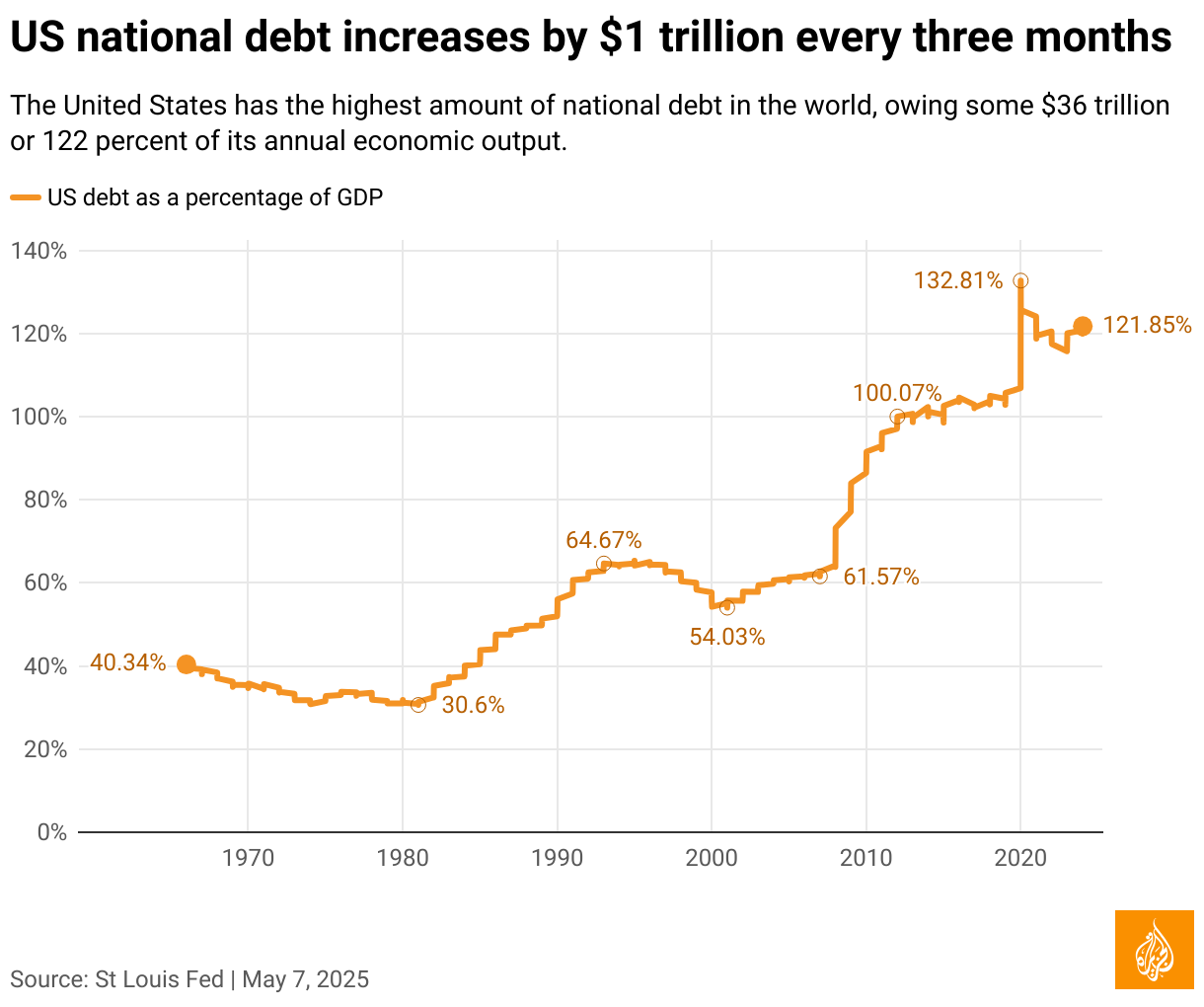
The US national debt is the total amount the federal government owes creditors. As of May 2025, it stands at $36.2 trillion—or 122% of the country’s GDP. It is growing at a rate of nearly $1 trillion every three months.
In 2020, during the pandemic, the debt-to-GDP ratio peaked at 133%. The US remains among the top 10 countries globally with the highest debt-to-GDP ratio.
🧮 What Is the Debt Ceiling?
The debt ceiling is a legislative limit on the amount the US government can borrow. Since 1960, it has been raised or suspended 78 times.
Reaching the ceiling prevents further borrowing unless Congress approves an increase—threatening default on essential payments such as Social Security and defense spending.
📊 Who Owns the $36 Trillion?
Domestic Holders — 75% of Debt ($27.2T)
- $15.16T – US private investors, mutual funds, pension funds
- $7.36T – US government agencies and trusts
- $4.63T – Federal Reserve
Warren Buffett, through Berkshire Hathaway, holds $314B—making him the largest non-governmental holder.
Foreign Holders — 25% of Debt ($9.05T)
- Japan: $1.13T
- United Kingdom: $779.3B
- China: $765.4B
- Cayman Islands: $455.3B
- Canada: $426.2B
US Treasury Department: Public Debt Reports
📑 What Are Treasury Bills, Notes, and Bonds?
The US borrows by issuing Treasury securities:
- Treasury bills (T-bills): Short-term (<1 year)
- Treasury notes (T-notes): Medium-term (2–10 years)
- Treasury bonds (T-bonds): Long-term (20–30 years)

These debt instruments are considered safe investments and widely used by both individuals and foreign governments.
💸 How High US Debt Affects the Average American
Growing national debt has tangible effects on American lives. Increased government spending on interest repayments could lead to:
- Higher taxes
- Rising interest rates for mortgages and loans
- Reduced public spending on healthcare, infrastructure, and education
🌍 Geopolitical Implications
Foreign holders like Japan and China have used their Treasury holdings as leverage in trade disputes, especially in response to recent US tariffs.
China’s holdings are at their lowest since 2009 as it continues to diversify reserves amid trade tensions.
China’s Declining US Bond Holdings
China’s Long Game with US Debt
✅ Conclusion
The US national debt—now at $36.2 trillion—is a growing concern for policymakers, investors, and citizens alike. With 25% of it held abroad, it has become a key factor in both domestic fiscal policy and international diplomacy.
The future will demand difficult choices: raising taxes, cutting spending, or finding innovative economic solutions to prevent a fiscal crisis.
📬 Stay Updated
Get the latest US economy and debt news delivered to your inbox.Subscribe to our newsletter