
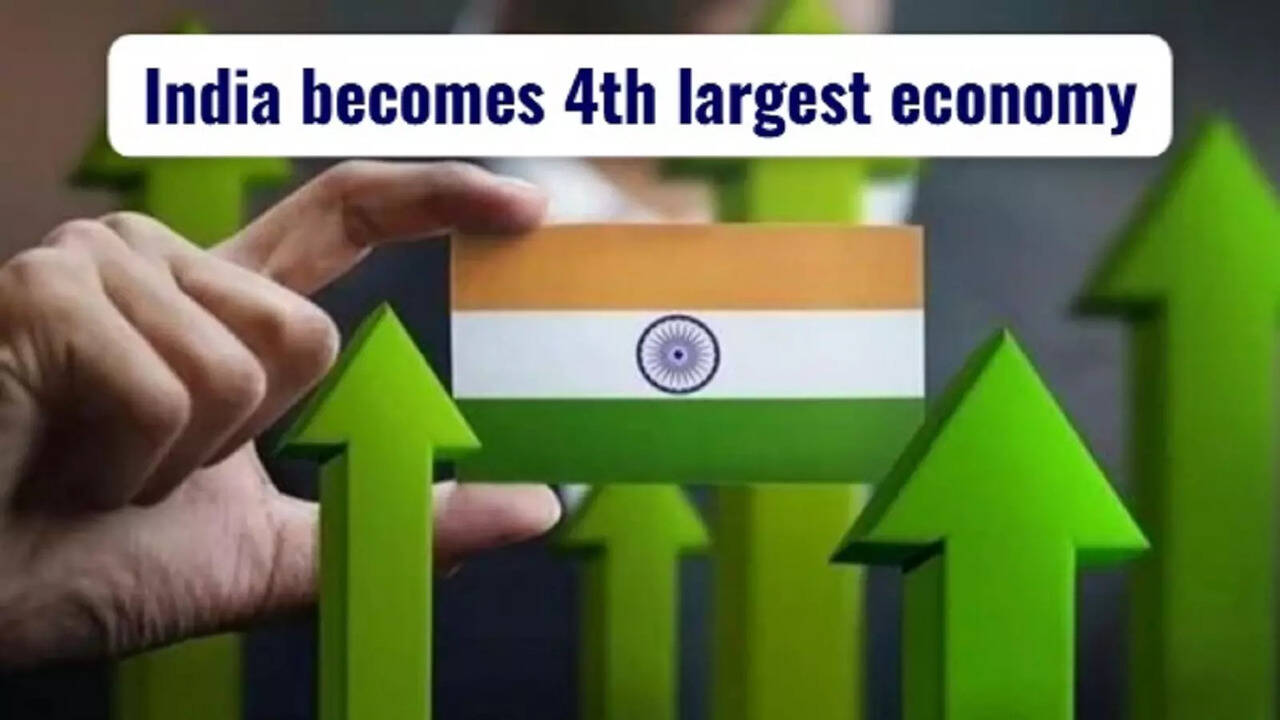
India is now officially the 4th largest economy in the world in nominal GDP terms, according to the latest data from World Bank and endorsed by NITI Aayog. While this milestone triggered celebrations across the country, it also ignited skepticism, satire, and much-needed introspection.
Top 5 in GDP, But Not Per Capita
Let’s face it—we’re not on the podium. No medals. In a nation obsessed with rankings, being 4th globally sounds impressive, but not when your GDP per capita still ranks in the triple digits. The average Indian continues to earn significantly less than counterparts in smaller but more developed nations largest economy.
As the saying goes: “When you can’t control the denominator (population), you have to grow the numerator (GDP).” And to its credit, India has done that. Our GDP per capita has doubled in the last 10 years, even as we navigate the complexities of geopolitics and population pressure.
A Historical Perspective: From Industrial Powerhouse to Service-Heavy Economy
According to historian Karl J. Schmidt’s An Atlas and Survey of South Asian History, in the 1750s, India contributed to 25% of the world’s industrial output. Urbanisation was ahead of Europe, and agricultural exports were booming. So what happened?
The answer: protectionist economic policies, unchecked population growth, and decades of missed industrial opportunities. We had enterprise, but we waited two years for a phone connection. That sluggishness cost us decades of economic momentum.
Urbanisation: The Next Big Push
India needs more urban centres, not renamed ones. We need cities built with future-proof infrastructure, linked suburbs, and efficient public transport. Better roads that don’t crumble under monsoons. No more potholes that make us upgrade to SUVs and unknowingly worsen climate change.

The Agriculture Trap: Misallocation of Human Capital
Nearly 45% of Indians work in agriculture, contributing only 13% to the GDP. This mismatch is India’s lowest-hanging economic fruit. We need these hands building semiconductors and assembling iPhones—not just sowing paddy.
Middle-Income Trap: A Real Threat
As we approach the $8,000 per capita mark, India risks getting stuck in the middle-income trap. Only 34 countries have moved from middle-income to high-income before their populations started aging. Over 100 are still stuck. Can India beat this curve?
Reasons to Stay Hopeful
- Fastest-growing major economy even during regional conflicts
- Record foreign investment in manufacturing sectors like electronics
- Political stability and strategic economic reforms
India has moved up the global economic ladder—while bombing a dozen airbases and still attracting FDI. That’s no small feat. But it’s not the finish line either. As we aim for a Developed Bharat by 2047, we must ensure per capita growth matches our GDP ambition.
Conclusion: Let’s Grow With Perspective
Becoming the 4th largest economy is a moment of pride, but let’s not confuse it with economic salvation. There’s much to celebrate, but even more to build. This is India’s economic adolescence—growing fast, making mistakes, and full of potential. The future depends on what we do next.
Jai Hind.
Liked this piece? Check out our blog on India’s Roadmap to Developed Nation Status by 2047 or explore how iPhone manufacturing is reshaping India’s economy.