
Introduction
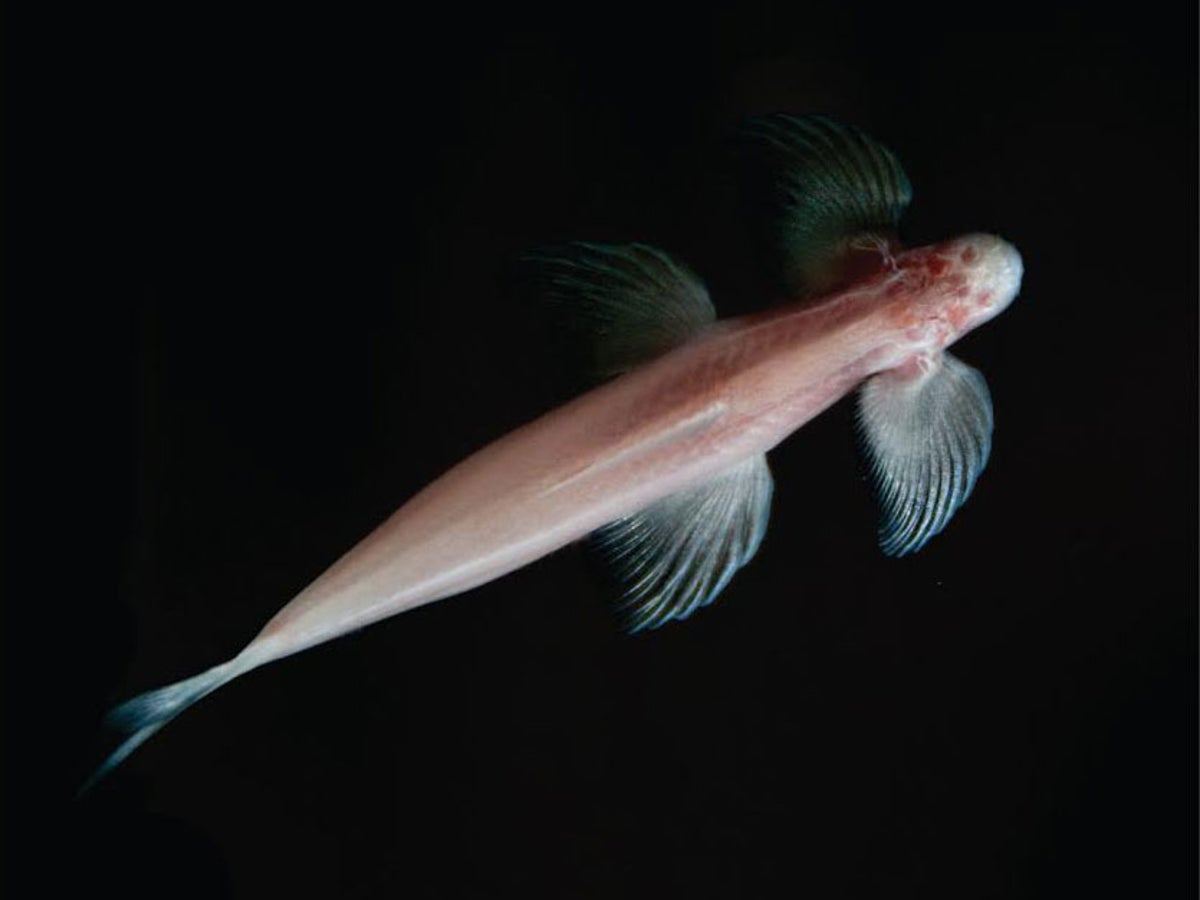
Deep within the limestone caverns of Meghalaya in north-eastern India lies a hidden world teeming with life that defies evolutionary norms blind cave fish. Recently, Indian researchers uncovered Schistura densiclava, a species of blind cave-dwelling fish with extraordinary adaptability — capable of living both above and below ground. This stunning discovery has sparked a renewed interest in one of nature’s most secretive ecosystems: India’s cave fish habitats.
What Makes Schistura Densiclava Unique?
Spotted first by zoologist Khlur Baiaineh Mukhim in the Krem Mawjymbuin cave, this fish surprised researchers with its partially retained eyesight — a rare trait in subterranean species. Unlike typical blind cave fish, which have completely evolved to function in darkness, S. densiclava can thrive in both subterranean pools and surface streams. Its name comes from the thick black stripe near its tail (“densiclava”).
Evolution in the Shadows
Cave-dwelling species usually exhibit remarkable evolutionary traits:
- Loss of pigmentation and eyesight
- Enhanced senses of smell and taste
- Specialized skin sensors to detect vibration
- Extreme survival skills in low-oxygen, food-scarce environments
Interestingly, many of these fish are born with vision, which diminishes as they mature — a stunning biological nod to their surface-dwelling ancestors.
Life in Meghalaya’s Caves
The state of Meghalaya hosts one of the world’s most complex and unexplored cave networks, with over 1,500 limestone and sandstone caves. These natural systems harbor biodiversity that rivals the polar and oceanic depths. Previous discoveries include the world’s largest cave fish, Neolissochilus pnar, found in the Krem Umladaw cave system in 2019.
Challenges of Exploration and Research

Researching these hidden fish is no easy feat. Scientists must rappel down vertical shafts, crawl through tight tunnels, and navigate pitch-black pools with only headlamps and handheld nets. Despite the physical hardships, researchers like Mukhim believe this work is essential to preserving India’s evolutionary heritage.
Conservation Imperatives
Most cave-dwelling fish in India are found nowhere else on Earth. With increasing tourism, habitat disturbance, and lack of awareness, these species face existential threats. As Mukhim warns, “Once a species is wiped out, you can never bring them back.” Conservation efforts must begin with recognition and documentation of these fascinating fish.
Conclusion
The discovery of Schistura densiclava is more than just a zoological footnote — it is a reminder of the wonders waiting in Earth’s least explored corners. As India’s caves slowly give up their secrets, the call to conserve this fragile underground ecosystem grows louder. It’s time we illuminate the darkness — not with light, but with scientific curiosity and protective care.