
Introduction
In a move that has sparked nationwide debate, three Māori Members of Parliament (MPs) in New Zealand were suspended for performing a haka in protest during a parliamentary session Māori MPs suspended. The haka was part of a bold statement by the Te Pāti Māori (Māori Party) against the controversial Treaty Principles Bill, which sought to redefine the nation’s founding treaty with its indigenous population. The event has raised urgent questions about freedom of expression, indigenous rights, and the future of race relations in New Zealand.
What Happened in Parliament?
The protest occurred during a debate last year, when opposition MP Hana-Rāwhiti Maipi-Clarke began the traditional Māori haka—a ceremonial dance often used to express challenge or resistance. She was joined by co-leaders Rawiri Waititi and Debbie Ngarewa-Packer. The haka disrupted the proceedings and led to a temporary halt in the House.
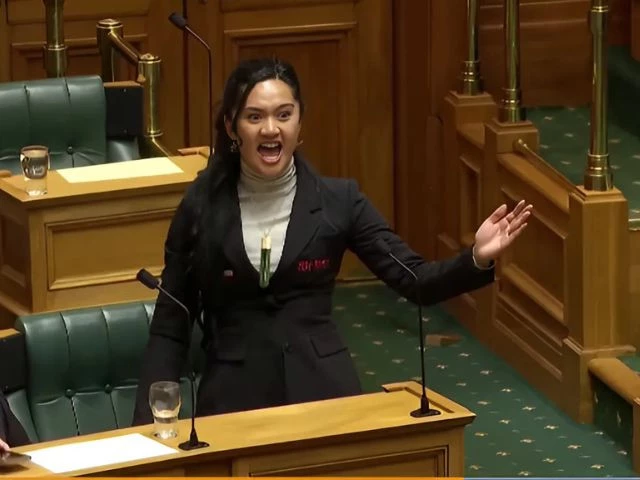
This week, the New Zealand Parliament voted to suspend Maipi-Clarke for 7 days and Waititi and Ngarewa-Packer for 21 days, marking the longest suspensions in parliamentary history. The previous record was only three days.
What Was the Protest About?
The demonstration was in opposition to the Treaty Principles Bill, introduced by the right-wing ACT party. The bill sought to legally define the principles of the Treaty of Waitangi, the 1840 pact between Māori chiefs and the British Crown.
Proponents of the bill claimed that the treaty has become divisive and does not reflect modern New Zealand’s multicultural identity. However, critics—including Māori leaders, human rights activists, and legal scholars—argued the bill threatened to roll back critical protections for Māori and ignore their historical grievances.
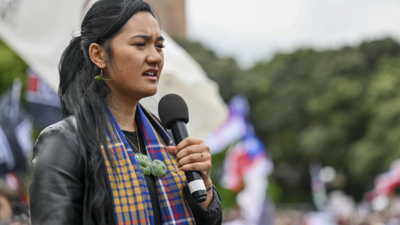
The controversy culminated in a nine-day hīkoi (peaceful protest march) that grew to more than 40,000 participants, making it one of the largest protest marches in New Zealand’s history.
The MPs’ Reactions
Speaking to the BBC, Ngarewa-Packer said, “We are being punished for being unapologetically Māori.” The 22-year-old Maipi-Clarke—the youngest MP in Parliament—became emotional during her defense, stating: “Are our voices too loud for this House—is that why we are being punished?”
Te Pāti Māori emphasized that the haka was not meant to intimidate but to assert identity and opposition. “We will never be silenced, and we will never be lost,” Maipi-Clarke added.
Parliamentary Response and Accusations of Racism
 "Māori MPs Suspended Over Haka Protest: Cultural Clash in NZ Politics 2")
A parliamentary committee had earlier ruled that the haka could have “intimidated” other lawmakers, justifying disciplinary action. But the decision triggered backlash. Many viewed the punishment as racially charged and symbolic of deeper tensions between the conservative government and Māori communities.
Prime Minister Christopher Luxon rejected those claims, saying the issue was about “not following parliamentary rules,” not about the haka itself. Foreign Minister Winston Peters added fuel to the fire by calling Te Pāti Māori a “bunch of extremists,” a comment for which he was later urged to apologize.
Wider Implications for Indigenous Rights
Though the Treaty Principles Bill was ultimately voted down in April by 112 to 11, the suspensions have reignited conversations about indigenous representation in national governance. Luxon’s government has already faced criticism for cutting funds to Māori development programs and planning to dismantle initiatives designed to address healthcare disparities for indigenous communities.
Supporters of the suspended MPs argue that the haka was a legitimate form of political expression and a cultural assertion in a space that often marginalizes Māori voices.
Conclusion
The suspension of the three Māori MPs is more than a procedural penalty—it reflects a complex clash between tradition and institutional norms, between indigenous identity and modern politics. As New Zealand continues to navigate its multicultural identity, the handling of this case may shape public trust, policy, and perceptions for years to come.
📌 Learn more about indigenous rights in global politics in our World Politics section.