
Introduction
In 2025, India’s Total Fertility Rate (TFR) declined to 1.9 children per woman, falling below the replacement threshold of 2.1. For a country historically worried about overpopulation, this shift signposts a major demographic transition .
📊 Key Statistics & Trends
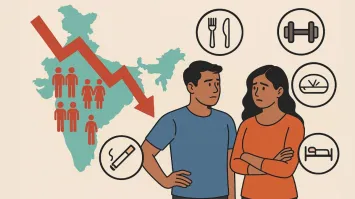
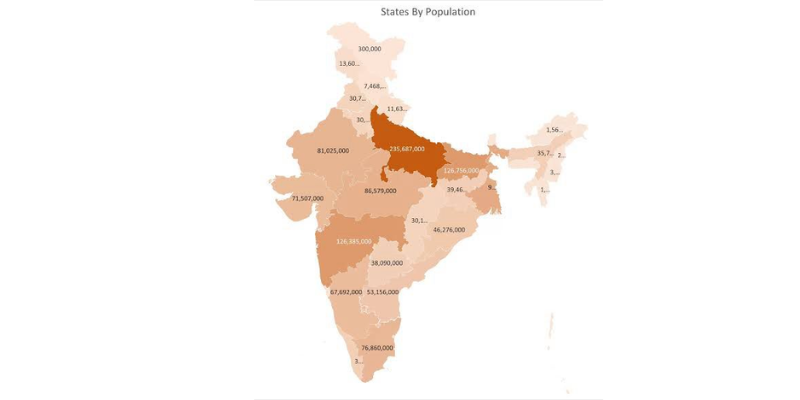
- India’s population reached approximately 1.46 billion in 2025—the world’s largest.
- TFR has declined from 2.3 in 2014 to 2.0 by 2021, and now to 1.9 in 2025 .
- Urban TFR is even lower, at ~1.6–1.7, especially in states like Kerala, Tamil Nadu, and Delhi .
🔍 Why It Matters
Falling below replacement fertility initiates a slow population decline unless offset by immigration or higher birth rates. India now faces:
- An aging population: Rising dependency ratios will burden the working-age group .
- Loss of demographic dividend: India’s economic advantage—derived from a youthful population—may begin to erode.
- Policy pressure: Needs for social security, old-age healthcare, and pension reform could surge.
🌱 What’s Driving the Decline?

- Rising costs and financial uncertainty: Many couples cite economic pressures as a reason to delay or limit childbearing .
- Education and women’s empowerment: Greater educational attainment and career focus lead to delayed marriage and lower births .
- Improved family planning: Access to contraception and reproductive healthcare supports smaller families .
🧭 Opportunities & Policy Options
India’s achievement in reducing fertility is notable—but new challenges lie ahead. Experts suggest:
- Shift revenue focus: From population control to enabling reproductive choice and fertility treatments .
- Encourage family-friendly policies: Paid parental leave, childcare support, and flexible work to ease the burden on young couples.
- Health education: Expand fertility awareness and early-childbearing guidance.
- Improve elderly infrastructure: Healthcare, pension schemes, and social support systems should adapt to an aging society.
⏳ Long-Term Outlook
India’s population is projected to peak around 1.7 billion by 2065 before beginning a gradual decline over the following decades. Crucially, population momentum—built from decades of high fertility—means population growth will continue in the short term despite sub-replacement fertility. However, without policy shifts, India may follow the fate of aging nations like Japan and parts of Europe.
Conclusion
India’s drop below replacement fertility marks the end of rapid population growth—but it is also a clarion call. As the workforce ages and dependency rises, policies must pivot to support families, seniors, and labor productivity. The goal isn’t just to control numbers—it’s to build a sustainable population structure that supports long-term prosperity.