
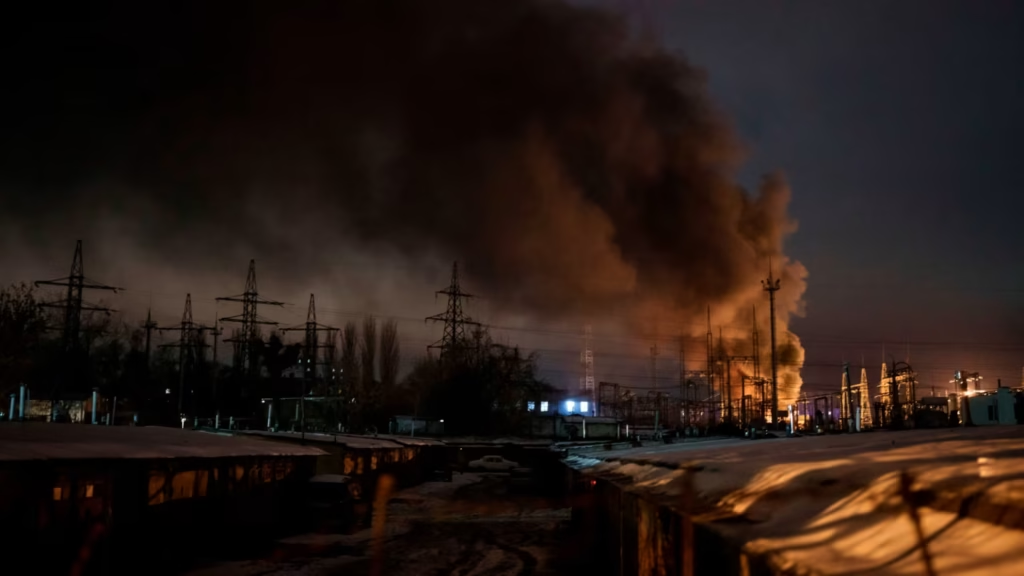
As the Russia-Ukraine war Russian strikes cripple stretches into its fourth winter, a new wave of Russian missile and drone attacks has left Ukraine reeling under widespread blackouts. On November 8, 2025, Moscow launched one of its most extensive strikes targeting Ukraine’s energy infrastructure, crippling the power grid and leaving thousands without electricity, heat, or water as freezing temperatures loom.
Ukraine’s state energy giant Centrenergo confirmed that all its thermal power plants (TPPs) were knocked offline following the barrage, marking one of the most severe blows to the nation’s power network since the full-scale invasion began in 2022. This devastating attack underscores Russia’s winter warfare strategy—to plunge Ukraine into darkness and disrupt civilian life by destroying vital utilities.
Massive Strikes Leave Ukraine in Darkness Russian strikes cripple
According to local officials, dozens of missiles and drones struck critical energy sites across Kyiv, Dnipro, and Kharkiv. Several explosions were heard overnight as emergency sirens wailed through the capital. The Kyiv Independent reported that Russia launched “an unprecedented number of missiles and countless drones—several per minute,” devastating power generation capacity and transmission lines.
Foreign Minister Andriy Sybiga condemned the strikes, saying that “Russia once again targeted people’s everyday life, depriving communities of light, water, and heating.” Prime Minister Yulia Svyrydenko added that the government’s immediate priority is the restoration of heat and electricity, while repair teams work around the clock to fix damaged substations.
Centrenergo: “Power Generation Is Down to Zero”
In a statement shared on Facebook, Centrenergo announced that all three of its thermal power plants—previously restored after the 2024 bombardments—are now offline. “Currently, power generation is down to zero. We lost what we had rebuilt around the clock—completely!” the company wrote. Despite the devastation, it vowed to “rebuild, repair, and implement a new generation” of facilities.
The company confirmed that engineers and emergency crews are on-site, battling freezing conditions and missile debris to restart partial operations. “We will do everything to restore the destroyed as soon as possible,” Centrenergo emphasized, thanking international partners for their support in providing emergency transformers and spare parts.
Impact on Daily Life and Transport
The blackout has led to widespread disruption in transport networks, with train services halted in several regions. Restoration Minister Oleksiy Kuleba said that teams are working to stabilize the rail grid and ensure the delivery of essential goods and humanitarian aid.
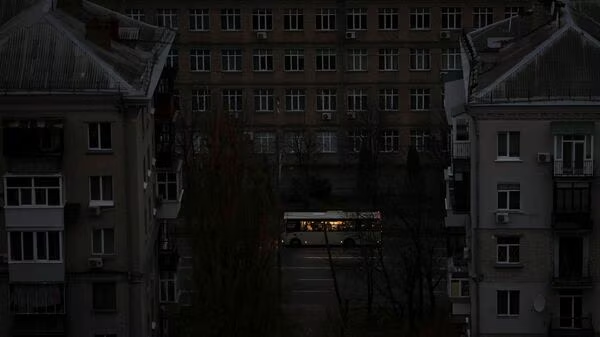
Public transportation in Kyiv has also been severely affected. Buses are operating with limited capacity under blackout conditions, while citizens rely on mobile generators and shared heating points. “It feels like 2022 again,” said one Kyiv resident quoted by BBC News. “We are surviving with candles and battery-powered lights.”
Drone and Missile Defense Efforts
Ukrainian President Volodymyr Zelensky confirmed that defense forces intercepted more than 400 drones overnight and shot down several cruise missiles. However, he admitted that many still broke through the air defenses, underscoring Ukraine’s urgent need for additional missile systems such as the Patriot air defense batteries.
“Only a few systems in the world can intercept such missiles effectively,” Zelensky said, adding that his government is in talks with the U.S. Department of Defense to secure more defensive systems. He reiterated that “protecting our energy infrastructure means protecting millions of Ukrainian lives.”
Why the Winter Energy War Matters
Russia’s ongoing campaign against Ukraine’s power grid is not new but has escalated significantly as winter approaches. The strategy aims to demoralize civilians, strain emergency services, and force Kyiv into concessions. Analysts believe that destroying Ukraine’s energy infrastructure could leave entire regions uninhabitable during the harsh winter months.
According to energy analysts from the International Energy Agency (IEA), Ukraine’s grid is already operating below 60% capacity, with natural gas storage at risk due to repeated Russian attacks. The destruction of thermal power plants puts additional pressure on hydro and nuclear facilities to sustain demand.
“Ukraine’s energy resilience is being tested to its limits,” said IEA’s Europe director Fatih Birol. “These strikes are not just military operations—they’re calculated acts to break the nation’s morale through cold and darkness.”
Rebuilding the Grid Amid Chaos
Since early 2024, Ukraine’s Ministry of Energy has been working with European partners to strengthen grid connections with neighboring countries such as Poland and Romania. This allows limited power imports during emergencies. However, the infrastructure damage now threatens even those cross-border links.
The European Union recently approved a €500 million emergency package to supply transformers, power cables, and generators to Ukraine. The EU’s Energy Commissioner Kadri Simson stated that “helping Ukraine keep the lights on is not just solidarity—it’s a strategic necessity.”
Meanwhile, Naftogaz reported that this was the ninth major attack on gas facilities since early October. “Our infrastructure has faced repeated missile hits, yet our teams continue working around the clock to restore supplies,” the company said.
Humanitarian Consequences and Civilian Suffering
The humanitarian situation is deteriorating rapidly. In cities like Dnipro and Kharkiv, Russian drones struck residential areas, killing at least four civilians. “In Dnipro, a drone hit directly at a residential building—three people died,” Zelensky told reporters. Emergency shelters have been reopened in schools and metro stations to provide heat and water.
The UN Office for the Coordination of Humanitarian Affairs (OCHA) warned that over five million Ukrainians could face “life-threatening cold exposure” if power restoration lags. Aid organizations are preparing to distribute thermal blankets, generators, and fuel kits.
International Reactions and Global Implications
Western governments have condemned Moscow’s renewed targeting of civilian infrastructure. The U.S. State Department called the attacks “a deliberate attempt to weaponize winter.” NATO Secretary-General Jens Stoltenberg urged allies to accelerate delivery of air defenses and energy assistance to Kyiv.
Experts warn that the intensification of energy strikes could ripple across Europe. Poland and Romania have already reported increased drone incursions near their borders, prompting both nations to strengthen air defenses. “Russia’s energy war is not just against Ukraine—it’s testing Europe’s collective resilience,” said a defense analyst at Chatham House.
Outlook: A Harsh Winter Ahead
As temperatures begin to drop, Ukraine faces one of its toughest winters yet. With all Centrenergo plants offline and limited repair capacity, rolling blackouts and heating shortages may persist for weeks. Still, Ukrainians remain defiant. “We’ve survived three winters of war. We’ll survive this one too,” said a volunteer from Kyiv’s Obolon district.
Energy experts caution that unless massive restoration aid arrives soon, the power grid collapse could deepen the humanitarian crisis. The resilience of Ukraine’s engineers and the speed of international support will determine whether millions can endure the coming cold.