
Table of Contents
Miami Elects First Democratic Mayor: 5 Powerful Shifts That Signal Political Change
Miami elects first Democratic mayor in nearly three decades, as voters delivered a sweeping victory to Eileen Higgins, reshaping the political landscape of one of Florida’s most closely watched cities.
Miami elects first Democratic mayor after years of Republican dominance, signaling voter fatigue with entrenched political power and a demand for ethical, accountable leadership.
A Historic Election Night in Miami
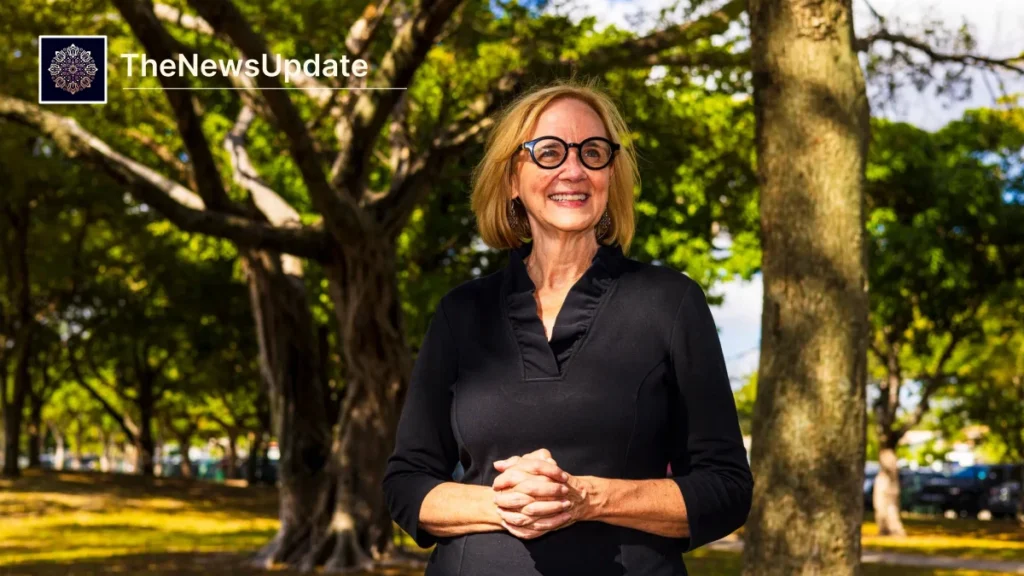
Miami voters chose Eileen Higgins, a former Miami-Dade County commissioner, in a decisive runoff election on Tuesday. Her victory marks the first time since the 1990s that a Democrat will lead the city.
At 61, Higgins will also become Miami’s first female mayor and its first non-Hispanic mayor in nearly three decades — a notable shift in a city where Cuban American Republicans have historically held sway.
Declaring victory, Higgins said the result represented a turning point for the city. She pledged to usher in a new era focused on ethical governance and measurable results for residents.
Voters Signal Desire for Change
The election followed years of corruption scandals and political infighting that plagued Miami City Hall. In the first round of voting held in November, voters sent a clear message by advancing Higgins and Emilio T. González to the runoff.
Both candidates campaigned on good-government platforms, but Higgins emerged as the clear favorite. Unofficial results showed her winning by an 18-point margin, prompting González to concede on election night.
The outgoing mayor, Francis X. Suarez, is term-limited after a turbulent tenure that included a brief presidential bid in 2024.
Miami elects first Democratic mayor at a time when trust in local leadership has been severely tested, making the scale of Higgins’s mandate particularly striking.
National Political Implications
Although Miami elections are officially nonpartisan, national political forces were deeply involved. Former President Donald Trump endorsed González, while the Democratic National Committee supported Higgins.
National Democrats traveled to Miami in the final days of the race, an unusual move for an off-year municipal election with relatively low turnout. Fewer than 37,000 ballots were cast in the runoff.
Despite Florida’s broader shift toward Republican candidates in recent cycles, Miami’s results bucked that trend — a development Democrats see as an early indicator heading into the 2026 midterms.
House Minority Leader Hakeem Jeffries publicly celebrated the result, suggesting momentum may be building in South Florida districts currently held by Republicans.
Eileen Higgins’s Path to Victory
Higgins, a mechanical engineer by training and a former Peace Corps director in Belize, built her political career by emphasizing competence and accessibility.
She was first elected to the Miami-Dade County Commission in 2018, representing what she described as a Republican-leaning district. Running as “La Gringa,” she appealed to voters across cultural and ideological lines.
Her landslide win this week demonstrated the success of a coalition that transcended ethnicity, party registration, and traditional political identities.
Miami elects first Democratic mayor in large part because Higgins positioned herself as a problem-solver rather than a partisan figure.
Governing Priorities Ahead
Throughout the campaign, Higgins stressed practical solutions over ideological battles. She said her administration would focus on infrastructure, resilience against flooding, and expanding access to affordable housing.
Her message emphasized service to residents regardless of party affiliation. “If their streets are flooded, I want public works projects that stop that flooding,” she said at a campaign stop. “If they need affordable housing, I don’t ask what political party they are.”
This approach mirrored the playbook of Miami-Dade County Mayor Daniella Levine Cava, another non-Hispanic Democrat who won broad support countywide and endorsed Higgins.
What Happens Next
Miami elects first Democratic mayor at a moment when local governance is under heightened scrutiny nationwide.
The challenge for Higgins will be translating electoral momentum into tangible results and restoring public trust after years of instability.
If successful, her tenure could serve as a blueprint for Democrats competing in traditionally conservative-leaning urban regions.
Conclusion
With her decisive victory, Miami elects first Democratic mayor in a generation, rewriting the city’s political narrative.
Eileen Higgins now steps into office with a clear mandate: clean up city hall, deliver results, and prove that competence — not party labels — can define Miami’s future.
External Resource
By The Morning News Informer | Updated December 9, 2025