
Table of Contents
Japan Tsunami Warning Earthquake Earthquake Strikes Off Japan’s Coast
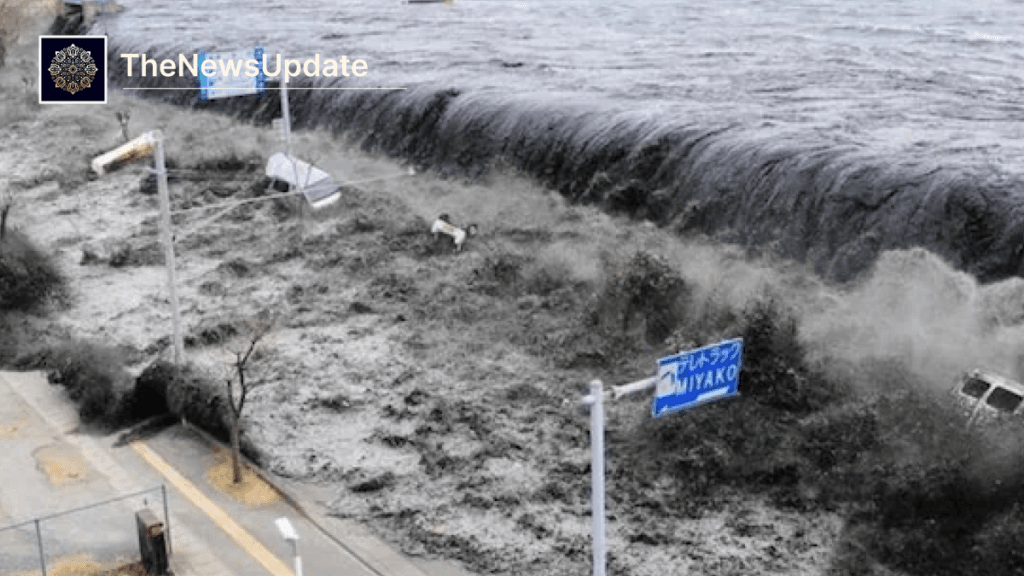
A powerful 7.6-magnitude earthquake struck off the eastern coast of Japan late Monday night, prompting authorities to issue an immediate tsunami warning. According to the Japan Meteorological Agency (JMA), the tremor occurred at approximately 11:15 p.m. local time and was felt across several northern regions.
The United States Geological Survey (USGS) reported that the earthquake’s epicenter was located roughly 44 miles (70 kilometers) offshore at a depth of about 33 miles. Seismic sensors detected strong undersea movements capable of generating tsunami activity, leading to heightened monitoring across the Pacific coastline.
The Japan tsunami warning earthquake remains under close observation as experts assess aftershocks and potential secondary effects.
Tsunami Warning Issued for Coastal Regions
Shortly after the earthquake, JMA issued a tsunami warning for several sections of Japan’s east coast. Officials cautioned that tsunami waves could reach coastal areas within a short time frame and advised residents to remain alert.
Tsunami warnings represent the highest level of alert under Japan’s disaster response system and are issued when there is a credible risk of significant wave impact. Emergency broadcasts were activated across affected prefectures to communicate safety instructions.
Authorities emphasized that tsunami conditions can change rapidly and urged residents to rely only on official updates.
Areas at Risk and Expected Wave Height
According to JMA projections, tsunami waves could reach heights of up to nearly 10 feet (3 meters) in certain coastal locations. Prefectures identified as potentially affected include Iwate, Aomori, and parts of Hokkaido.
While initial estimates vary by region, officials warned that even smaller waves can pose serious risks near harbors, river mouths, and low-lying areas. Past events have demonstrated that localized geography can amplify wave impact.
Residents in forecast zones were advised to move to higher ground if instructed and stay away from shorelines until warnings are lifted.
Emergency Response and Monitoring
Japan’s disaster response agencies immediately initiated monitoring protocols following the quake. Coastal surveillance systems, offshore sensors, and tide gauges were activated to track wave movement in real time.
Local governments prepared evacuation centers and coordinated with emergency services to ensure readiness should conditions worsen. Transportation authorities also monitored coastal rail lines and ports for possible disruption.
As of the latest update, no major damage or casualties have been confirmed, though officials cautioned that assessments are ongoing.
Japan’s Seismic History and Preparedness
Japan is one of the most seismically active countries in the world, located along the Pacific Ring of Fire. The nation has invested heavily in early-warning systems, public education, and infrastructure designed to withstand earthquakes and tsunami events.
Past disasters, including the devastating 2011 earthquake and tsunami, have shaped modern preparedness strategies. Today, real-time alerts and coordinated response measures allow authorities to react within minutes of seismic activity.
Experts note that rapid communication and public compliance play a critical role in minimizing harm during tsunami events.
What Residents Should Know
Officials urge residents in coastal regions to stay informed through official channels and avoid unnecessary travel near shorelines. Fishing boats and maritime operators have been advised to follow safety instructions from port authorities.
The situation remains fluid, and aftershocks are possible in the hours following the initial quake. Authorities stress that warnings will be updated as additional seismic data becomes available.
This is a developing story, and further updates will be issued as soon as new information is confirmed.
Read More
Read More:
https://edition.cnn.com/2025/12/08/asia/tsunami-warning-japan-earthquake-intl
https://themorningnewsinformer.com/pokrovsk-fall-ukraine-russia/