
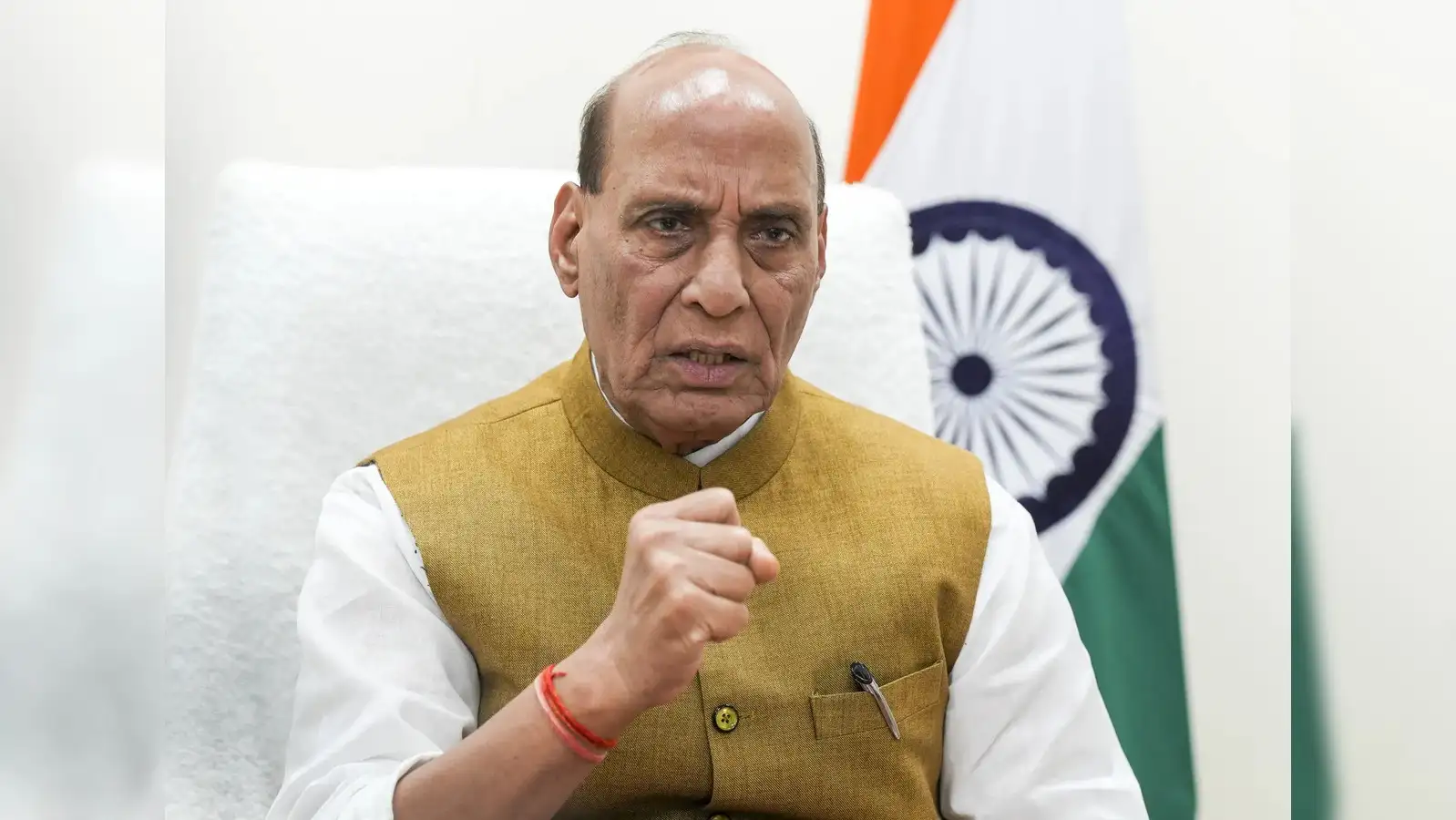
India’s Defence Minister Rajnath Singh, during his visit to Srinagar on Thursday, made a sharp statement questioning Pakistan’s credibility as a nuclear-armed nation. He called on the International Atomic Energy Agency (IAEA) to supervise Pakistan’s nuclear weapons, citing Islamabad’s history of reckless behavior and “nuclear blackmail”.
“Are Nukes Safe With Pak?”
Speaking from Srinagar, Mr. Singh stated, “How safe are nuclear weapons in the hands of such an irresponsible and rogue nation?” He added that India’s military response, seen through Operation Sindoor, reflects a commitment to end terrorism at its source, regardless of Pakistan’s nuclear threats.
He emphasized, “The world has seen how irresponsibly Pakistan has threatened India. I believe Pakistan’s nukes should be brought under international supervision.”
First Visit After Operation Sindoor
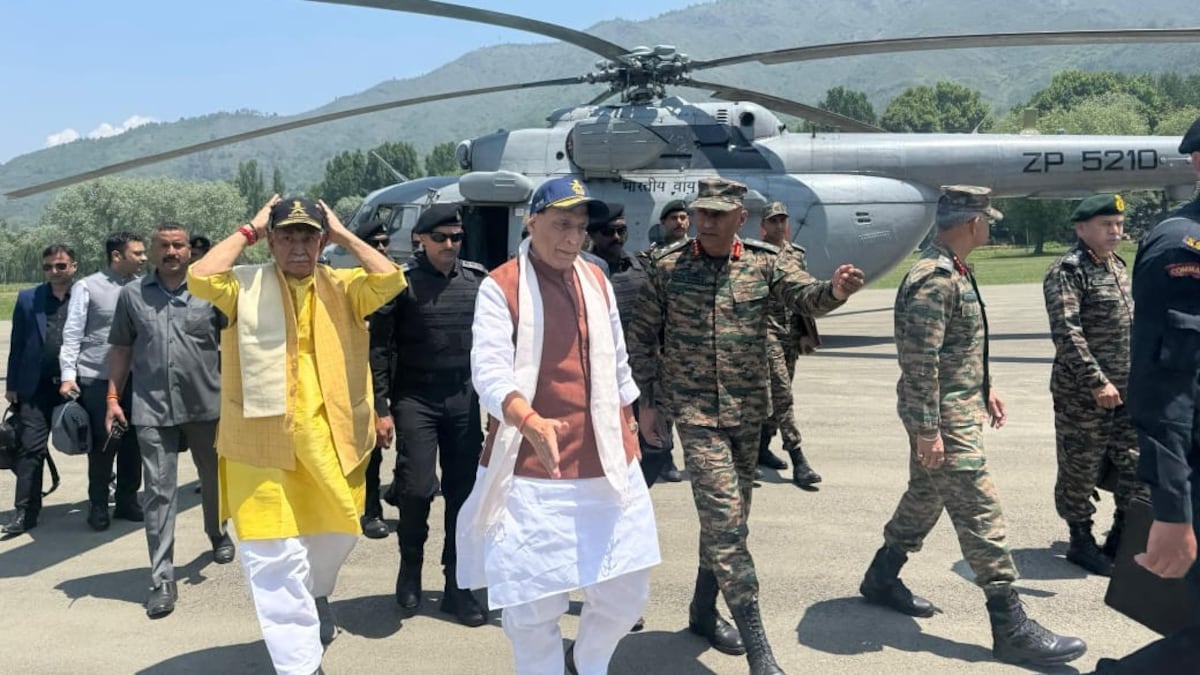
This was Rajnath Singh’s first visit to the Kashmir Valley after India conducted Operation Sindoor on May 7—a targeted military operation against terror bases in Pakistan and Pakistan-Occupied Kashmir. He inspected damage from Pakistani shelling and interacted with Indian soldiers at the 15 Corps Headquarters in Srinagar.
He was accompanied by Jammu & Kashmir Lieutenant Governor Manoj Sinha. The Defence Minister paid tribute to soldiers and civilians killed in recent attacks, saying, “I bow to the brave jawans and innocent civilians who lost their lives. I also salute our injured soldiers.”
Operation Sindoor: A Turning Point
Calling Operation Sindoor a “big commitment,” Singh affirmed India’s new stance: “This is the biggest operation against terror. We will go to any extent to end terrorism. Pakistan must stop harboring terrorists.”
PM Modi Rejects “Nuclear Blackmail”
Earlier in the week, Prime Minister Narendra Modi delivered a national address on Operation Sindoor from the Adampur Air Force Base, one of the targets of Pakistan’s retaliatory strikes on May 9-10. PM Modi outlined a new three-pronged security doctrine:
- Strong retaliation to any terrorist attack.
- No tolerance for nuclear threats.
- No separation between terrorists and governments supporting them.
“If there is another attack, India will respond decisively. Operation Sindoor is the new normal,” said the Prime Minister, referencing India’s past strikes like Uri (2016) and Balakot (2019).
International Attention on Pakistan’s Nukes
Singh’s call for IAEA involvement adds a significant international dimension to India’s post-Operation Sindoor posture. The move signals growing concerns in New Delhi about the security and command structure of Pakistan’s nuclear arsenal, especially after repeated threats and missile attacks from across the border.
Ceasefire and Ongoing Vigilance
Despite a brief ceasefire initiated by Pakistan earlier this week, border calm only returned after continued violations. India repelled drone and missile attacks targeting Jammu & Kashmir, Rajasthan, and Punjab.
India’s position, now reiterated by both its Defence Minister and Prime Minister, suggests that nuclear threats will no longer deter conventional or covert responses to terror.
Conclusion
As tensions cool but security alerts stay high, Singh’s statement marks a significant step in India’s evolving nuclear diplomacy and military policy. The demand for international supervision of Pakistan’s nuclear weapons may soon become part of India’s official lobbying in global forums like the United Nations and IAEA.
Also Read: Flights Resume at 32 Border Airports After Ceasefire
External Resource: International Atomic Energy Agency (IAEA)