
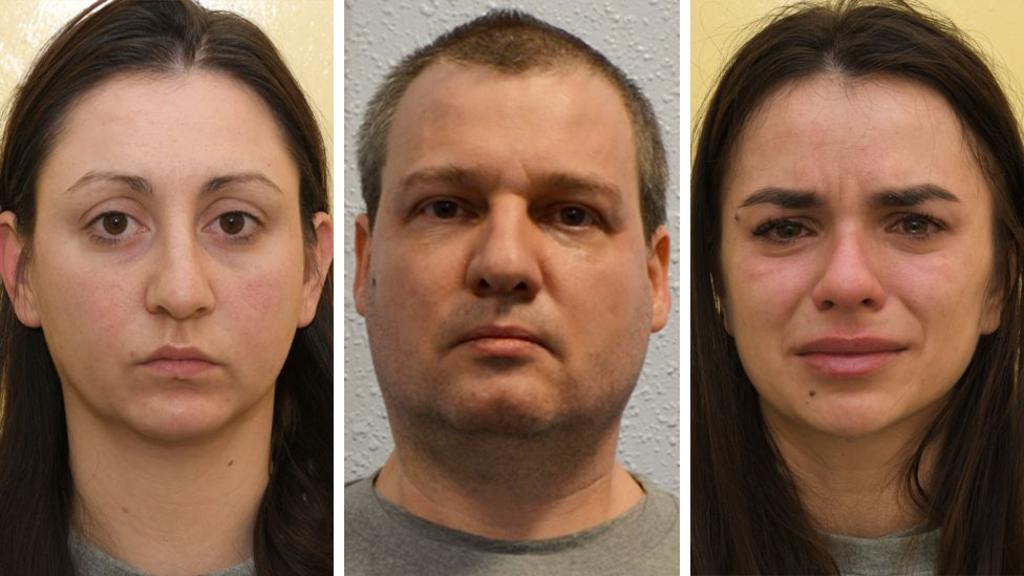
Orlin Roussev, leader of a Russian spy ring operating in the UK, was sentenced to 10 years and 8 months in prison on Monday. His team, comprising of five Bulgarian nationals, has been handed a total of about 40 years in jail for espionage activities that posed a serious risk to British national security.
The spy ring, directed by Jan Marsalek, a fugitive linked to Wirecard, carried out surveillance on journalists, dissidents, and Ukrainian soldiers. The operations were discovered following extensive investigations that uncovered thousands of encrypted messages between Roussev and Marsalek. Prosecutors stated that the unit posed a significant threat to UK security and operated on an “industrial scale.”
Details of the Case and Convictions

Roussev and five others were part of a unit that operated under Marsalek’s direction. They were responsible for espionage activities across Europe, including surveillance on military targets such as Ukrainian troops being trained at a U.S. military base in Germany. The UK’s court highlighted the unit’s plans to intercept mobile phone signals at a U.S. military base in Germany, which would have given them valuable intelligence on Ukraine’s military operations. The investigation further revealed conversations between Roussev and Marsalek that included references to Russia’s GRU and their operations in Europe.
For more on espionage laws and cases, see Espionage Law at Cornell.
Espionage Activities and International Repercussions
Prosecutors noted that the spy ring’s operations were not directly managed by Russia’s intelligence agencies but were financially motivated. These activities, however, raise serious national security concerns as they were conducted by foreign nationals with clear ties to Russian military intelligence. The Russian embassy in London has not commented on the case, though the Kremlin has always rejected such spying allegations. For more on UK-Russia tensions, refer to UK-Russia Relations and Tensions in 2025.
The Role of Jan Marsalek and the Broader Impact
Jan Marsalek, the ringleader of the spy operation, remains a fugitive, believed to be in Russia. His operations have significantly strained UK-Russia relations, particularly after the poisoning of Russian double agent Sergei Skripal in 2018, which the UK linked to Russian intelligence. The espionage activities further exacerbated tensions between the two nations, contributing to a post-Cold War breakdown in diplomatic relations. Learn more about this case in Skripal Poisoning and Its Impact on UK-Russia Relations.
As the espionage case unfolds, it highlights the growing challenges posed by foreign intelligence operations targeting critical national security assets in the West. The legal ramifications and broader implications of such operations continue to shape the future of international espionage and counterintelligence efforts.