
Introduction
A high-profile cryptocurrency agreement involving a US fintech firm tied to former President Donald Trump’s family and Pakistan’s Army Chief General Asim Munir has sparked international scrutiny. The deal between World Liberty Financial and Pakistan’s newly formed Crypto Council aims to transform Islamabad into South Asia’s crypto hub but raises geopolitical and financial concerns amid rising regional tensions.
Background: The World Liberty Financial Deal
World Liberty Financial (WLF), a blockchain and crypto investment firm, reportedly has strong ownership links to Trump’s family. Eric Trump, Donald Trump Jr., and Jared Kushner collectively own 60% of WLF shares. In April 2025, WLF signed a Letter of Intent with Pakistan’s Crypto Council, which quickly appointed Binance founder Changpeng Zhao as advisor to boost credibility.
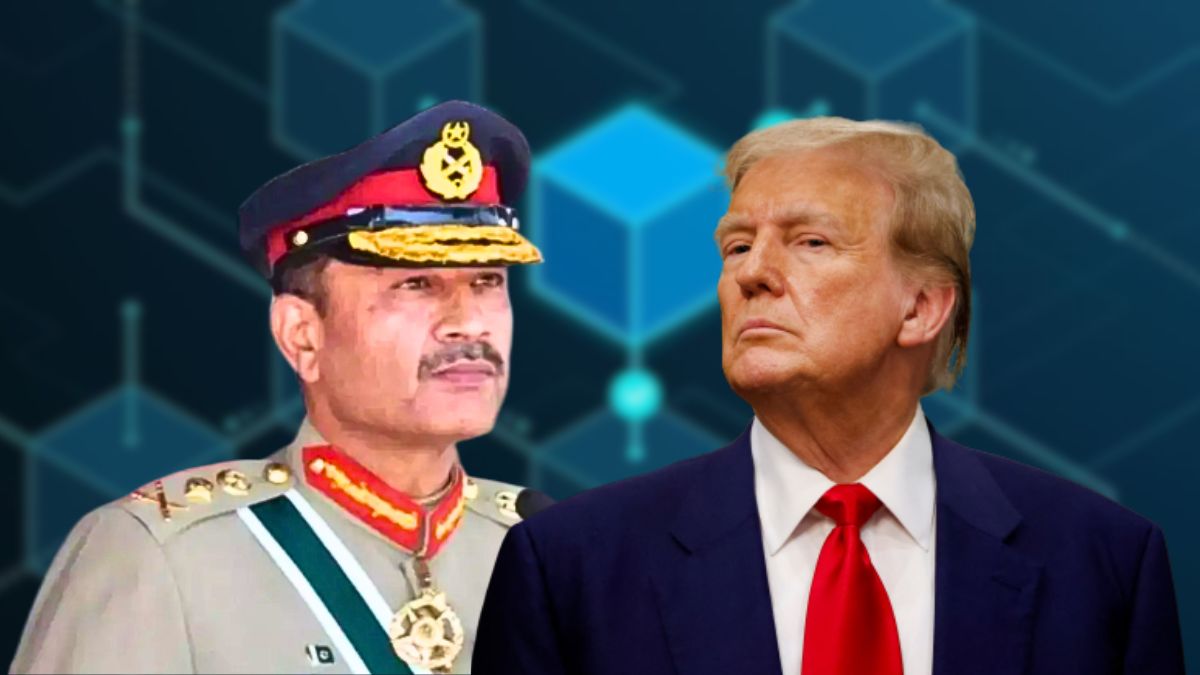 "Trump-Linked Crypto Deal with Pakistan’s Asim Munir Under Global Scrutiny 1")
The ambitious plan includes asset tokenization, multiple stablecoins, and the creation of a regulatory sandbox for decentralized finance (DeFi) projects aimed at fostering financial inclusion and digital transformation in Pakistan.
Asim Munir’s Role and Diplomatic Implications
The deal’s facilitation by General Asim Munir has raised eyebrows in diplomatic circles. A US delegation led by WLF founder Zachary Witkoff—son of Steve Witkoff, a longtime Trump associate and current US Special Envoy to the Middle East—visited Islamabad for the signing. Reports indicate that Prime Minister Shehbaz Sharif and Gen Munir personally attended a closed-door meeting to finalize the agreement.
International Concerns and Regional Context
This crypto agreement now faces intense scrutiny amid ongoing India-Pakistan conflict. Following a terrorist attack in Pahalgam and India’s military response (Operation Sindoor), critics question the geopolitical motivations behind this economic deal. World Liberty Financial has issued a statement emphasizing the purely economic nature of the agreement, denying any political intent.
However, neither the Trump family nor the current US administration have publicly commented, fueling speculation about potential political entanglements.
Historical US-Pakistan Relations

This controversy unfolds against a backdrop of fluctuating US-Pakistan relations. During Trump’s previous administration, Pakistan was placed on the Financial Action Task Force (FATF) grey list due to concerns about terrorism financing and money laundering. The resulting economic sanctions severely impacted Pakistan’s economy, pushing it to the brink of default and forcing it to seek aid from various nations.
Conclusion
The crypto deal linking Trump’s family, World Liberty Financial, and Pakistan’s General Asim Munir signals a complex intersection of finance, technology, and geopolitics. While the agreement aims to modernize Pakistan’s financial system through blockchain innovation, it faces growing international scrutiny amid regional instability and historical US-Pakistan tensions.
As this story develops, global observers will watch closely to see whether economic ambitions outweigh geopolitical risks in this controversial partnership.
For more on evolving US-Pakistan relations and cryptocurrency trends in South Asia, see our article US-Pakistan Economic Ties and Crypto Developments.
Sources: Times of India, AP News